Guide
Paper Plane Games: What Makes a Great One on Mobile
What makes a great paper plane game on your phone: a light glider feel, short runs, readable hazards, fair deaths and variety, and how Paper Drift does each.
A great paper plane game feels like flying real paper: light, a little floaty, steered with small movements, over in short runs, with hazards you can read at a glance and crashes that are always your own fault. Paper Drift is a free arcade game for Android and iPhone built around exactly that idea: you steer a folded paper plane down an endless shaft of girders.
Here is what separates a good paper airplane game from a forgettable one, and how Paper Drift handles each part.
What makes a great paper plane game
Everyone has folded a paper plane, and everyone knows how one moves. That makes it a wonderful hero for a mobile game, and a demanding one: if the plane feels wrong, players notice straight away. Five things decide it.
1. It flies like paper
A paper plane is not a jet. It glides, drifts and loses speed when you ask too much of it. A good paper game keeps that lightness: the plane should answer small inputs, carry a little momentum and never feel as if it runs on rails. The controls should be simple enough to learn in one run and precise enough to master over a hundred.
2. Short runs and instant retry
Phones get played in spare minutes: a queue, a bus stop, the end of a lunch break. A run has to start at once, and a crash has to put you back in the air in a second, not after a loading screen. The best plane games on mobile make “one more go” cost nothing.
3. Hazards you can read
When things move fast, the screen must answer one question instantly: what kills me, and what doesn’t? Deadly objects need a look of their own, harmless decoration must look harmless, and anything new should be announced before it arrives.
4. Deaths that feel fair
Nothing ruins a game faster than a crash you could not have avoided. There should always be a way through, and the way through should be learnable, so that losing teaches you something instead of just ending the run.
5. Variety that keeps you falling
A long run needs the scenery to change, new obstacles to turn up and goals beyond the score: something to collect, something to unlock, a reason to come back tomorrow.
How Paper Drift does it
A paper plane with real flight rules
Paper Drift’s plane follows two rules you can feel in the first run: fly level to dive faster, bank to slow your fall. Flying flat drops you fast; banking buys time and costs speed. And walls only scuff you, beams end the run: a wall scrape locks your steering for a moment, while a girder is the end.
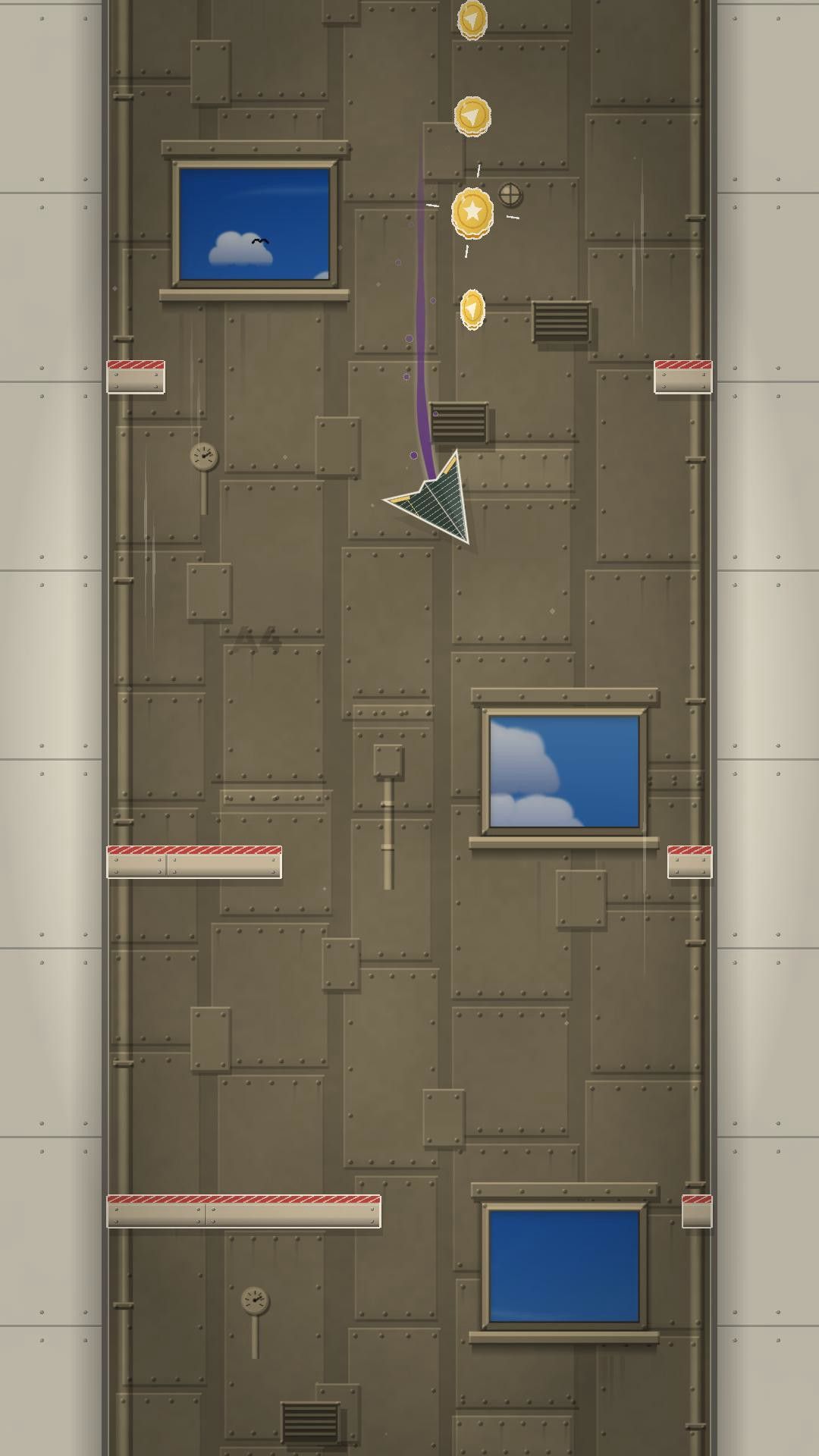
You steer by holding the left or right half of the screen, with an on-screen Steer Pad whose keys you place and size yourself, or by tilting the phone. A left-handed layout is one switch away in Settings.
Short runs you can start anywhere
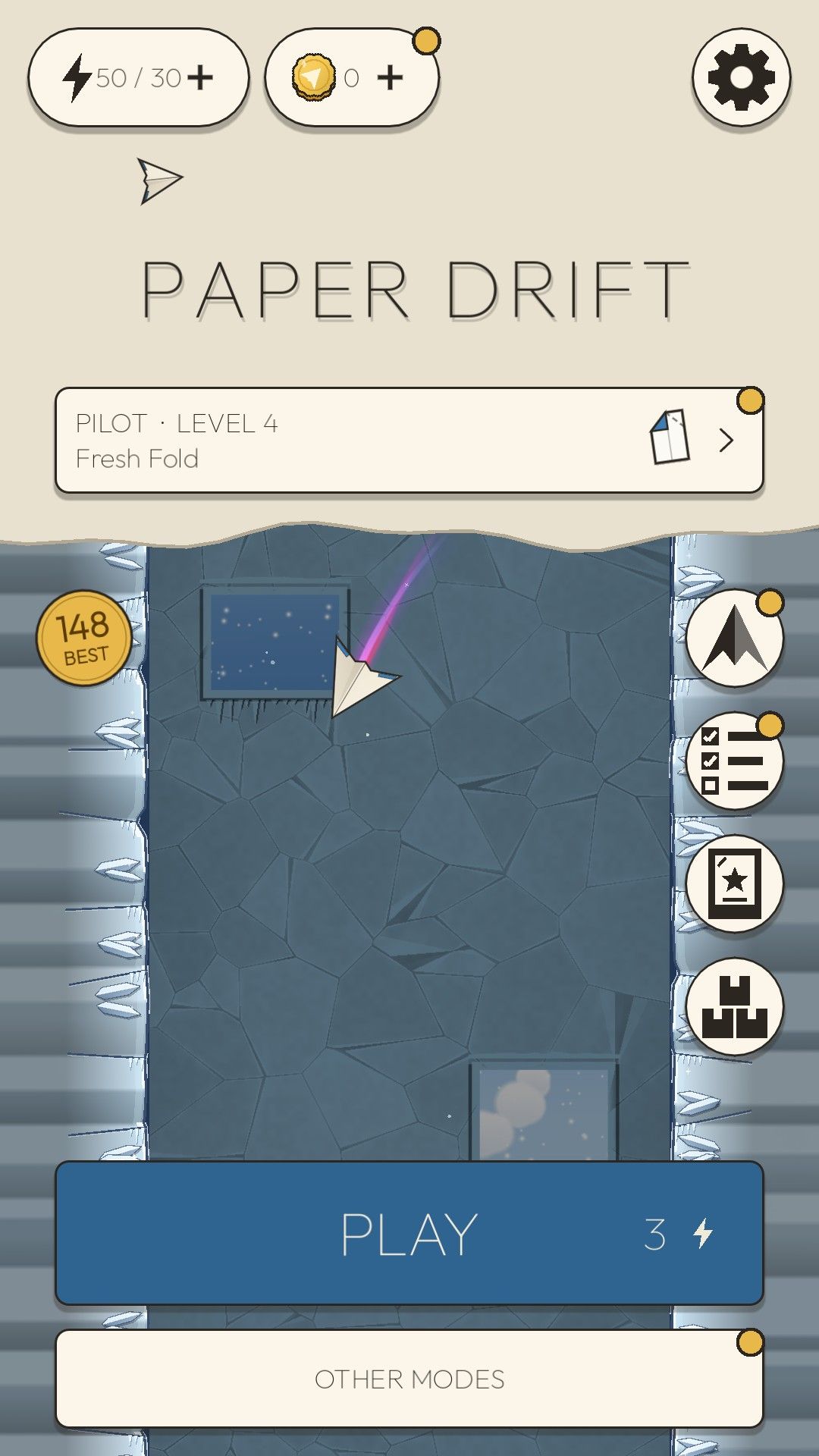
Tap PLAY and you are falling. When you crash, retry restarts the run in place, with no scene to reload. The game is portrait, plays without an internet connection and needs no account; only ads, the shop and leaderboards need a connection.
Short runs, no internet: tap play and you are already falling. Crashed? Go again in one second.
Hazards drawn to be read
Every girder carries the same red hazard tape, so a beam looks like a beam in every world. Paper streamers are just paper: they cannot hurt you. The first time you meet something new, a banner names it with a one-line hint, such as “CRANES! Time the swing of the crates” or “LASERS! They charge up, then fire across”. After that, the shaft rumbles to warn you, and a boss arrives with a quake. The Foundry’s rocks fall where the top of the screen glows.
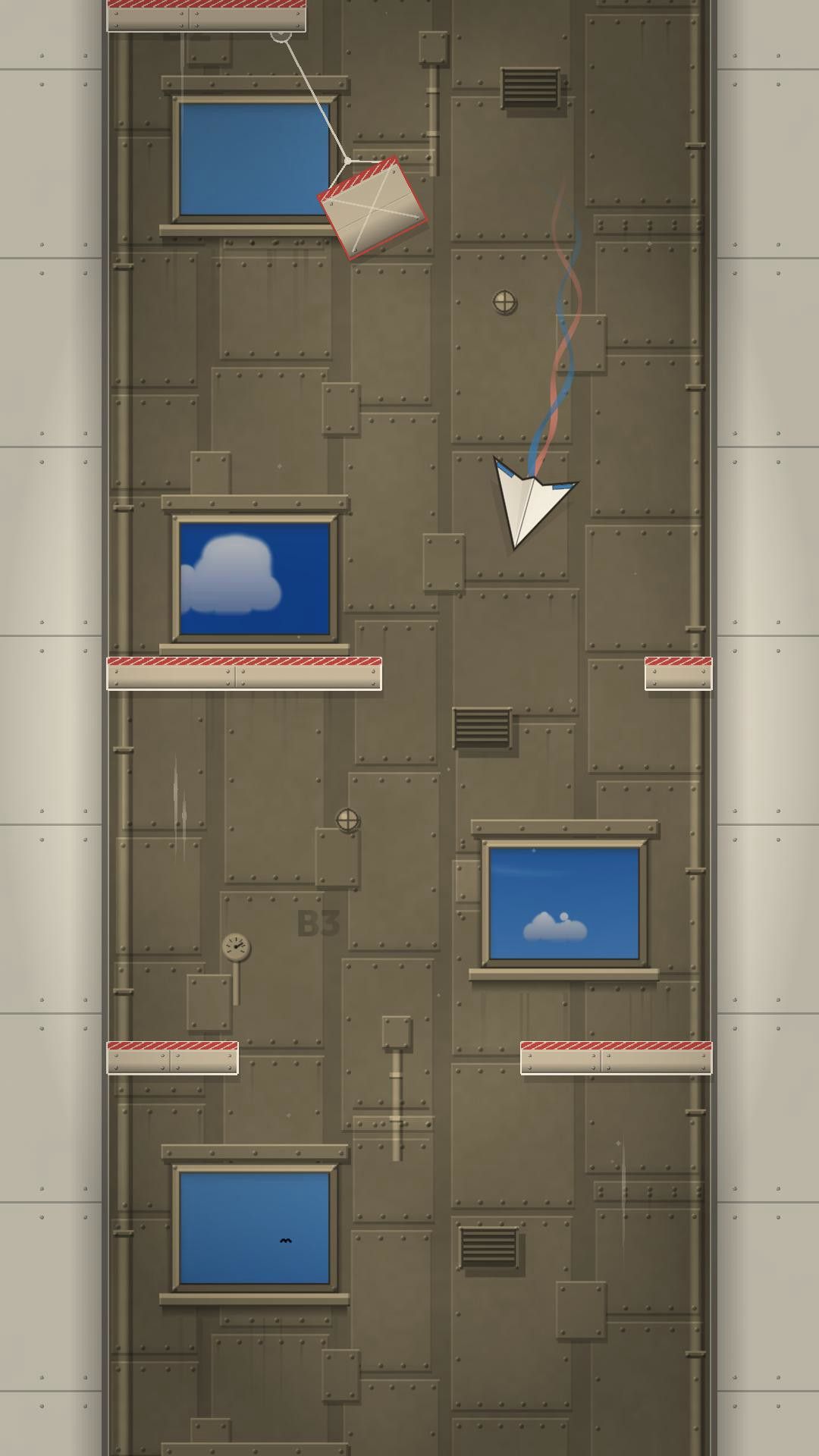
For players who need it, colour-vision modes add a diagonal hatch to deadly beams, and there are Reduce Motion, High Contrast and Bigger UI options too.
Fair by design
Fairness in Paper Drift is not a promise; it is tested. Every chunk of the shaft is flown by the game’s own simulation before it ships: from every entry position, in both mirrorings, at several speeds, plus a pass that models 60 ms of reaction time. No chunk can be cleared by falling straight down, and pistons, shutters and blades never close the shaft: there is always a gap.
The simulation is deterministic, so the run that beat you can be learned rather than blamed. In Time Attack you even race a ghost of your own best run.
Everything in Paper Drift is code drawing folded paper — and the game flies every level before it ships.
Worlds that change as you fall
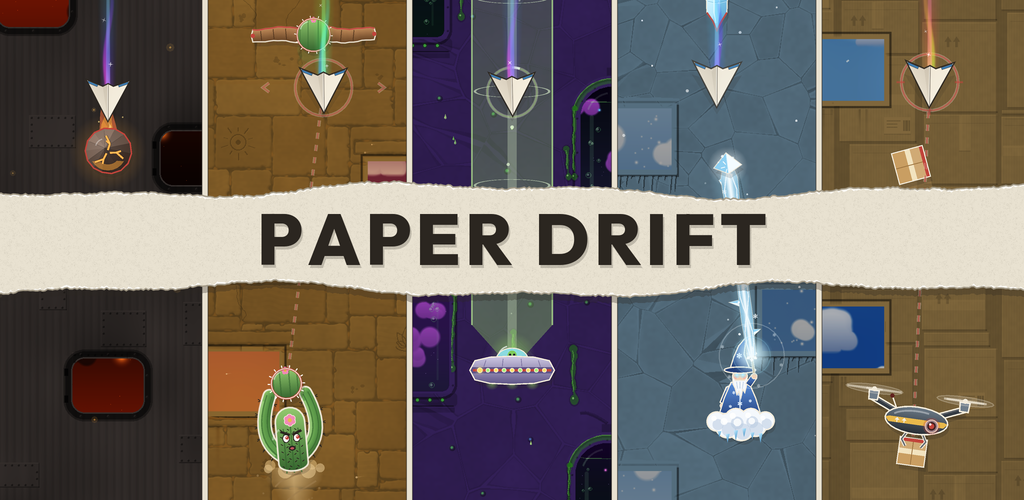
Every 100 points the scenery changes, and every 400 points the run moves on to a new world. There are seven of them all year round, plus Halloween’s haunted manor from 19 October to 8 November. You start with three and unlock the rest the first time a run flies into them. You never pick the starting map: each run draws one from the worlds you have reached.
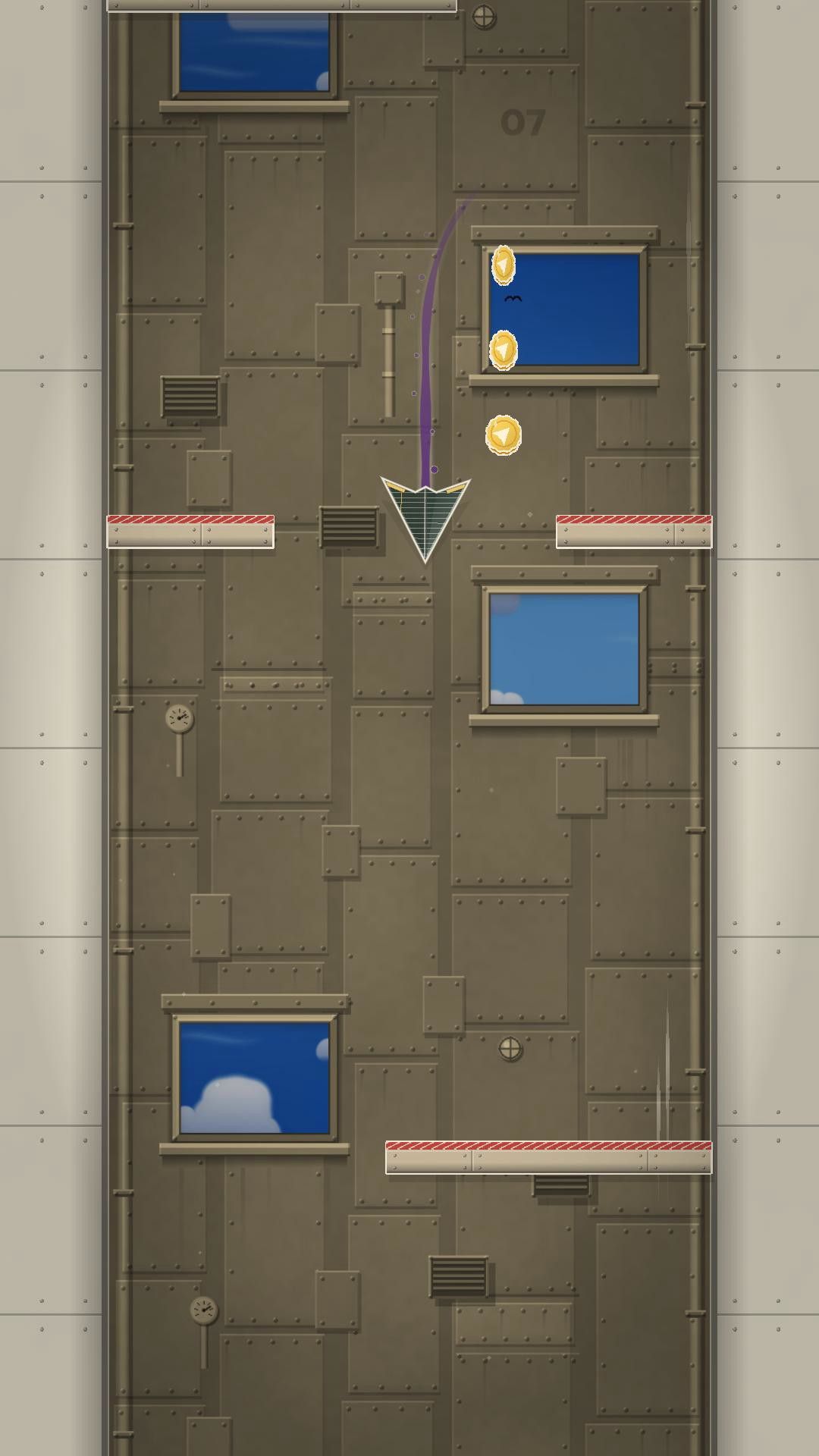
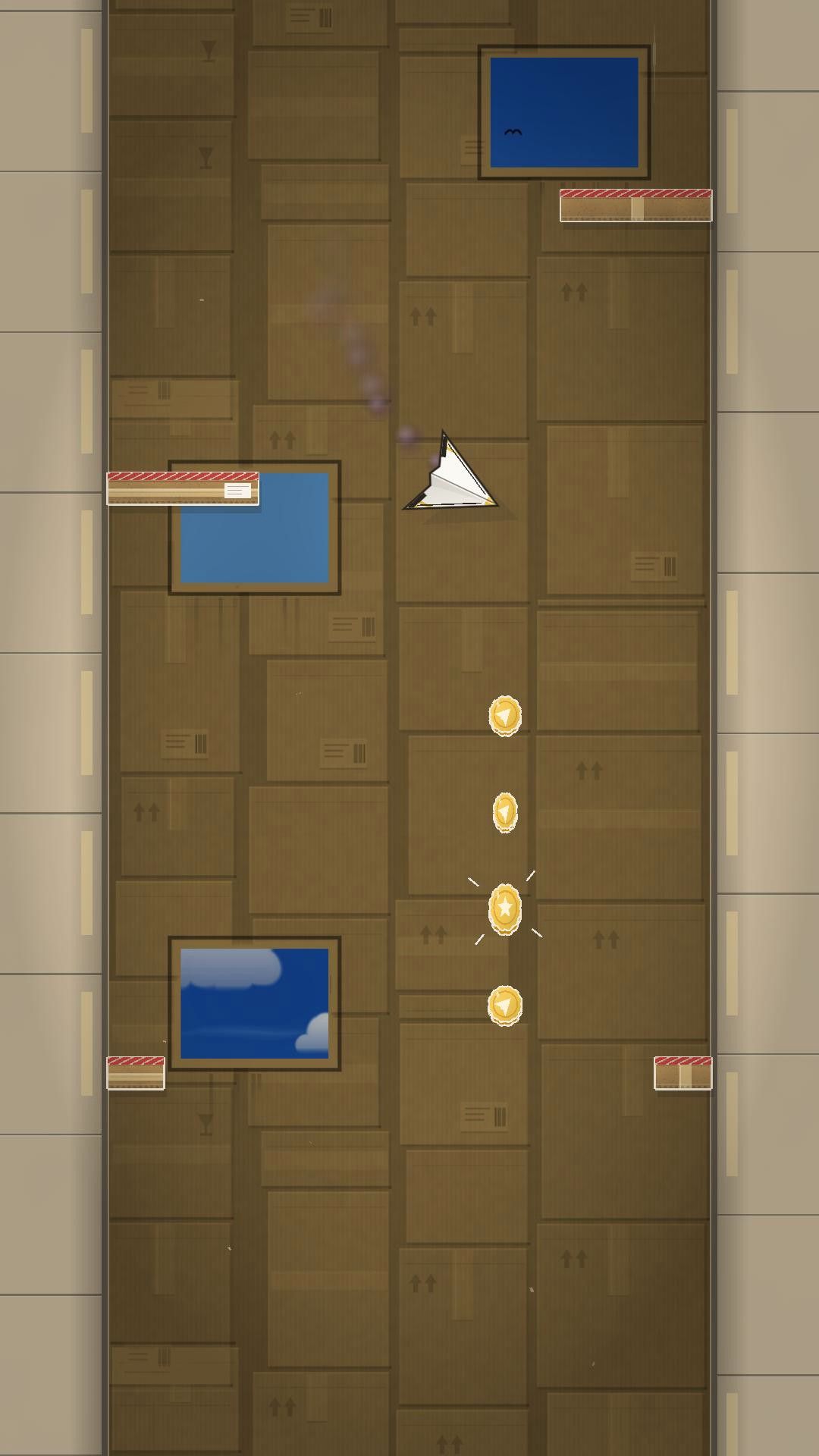
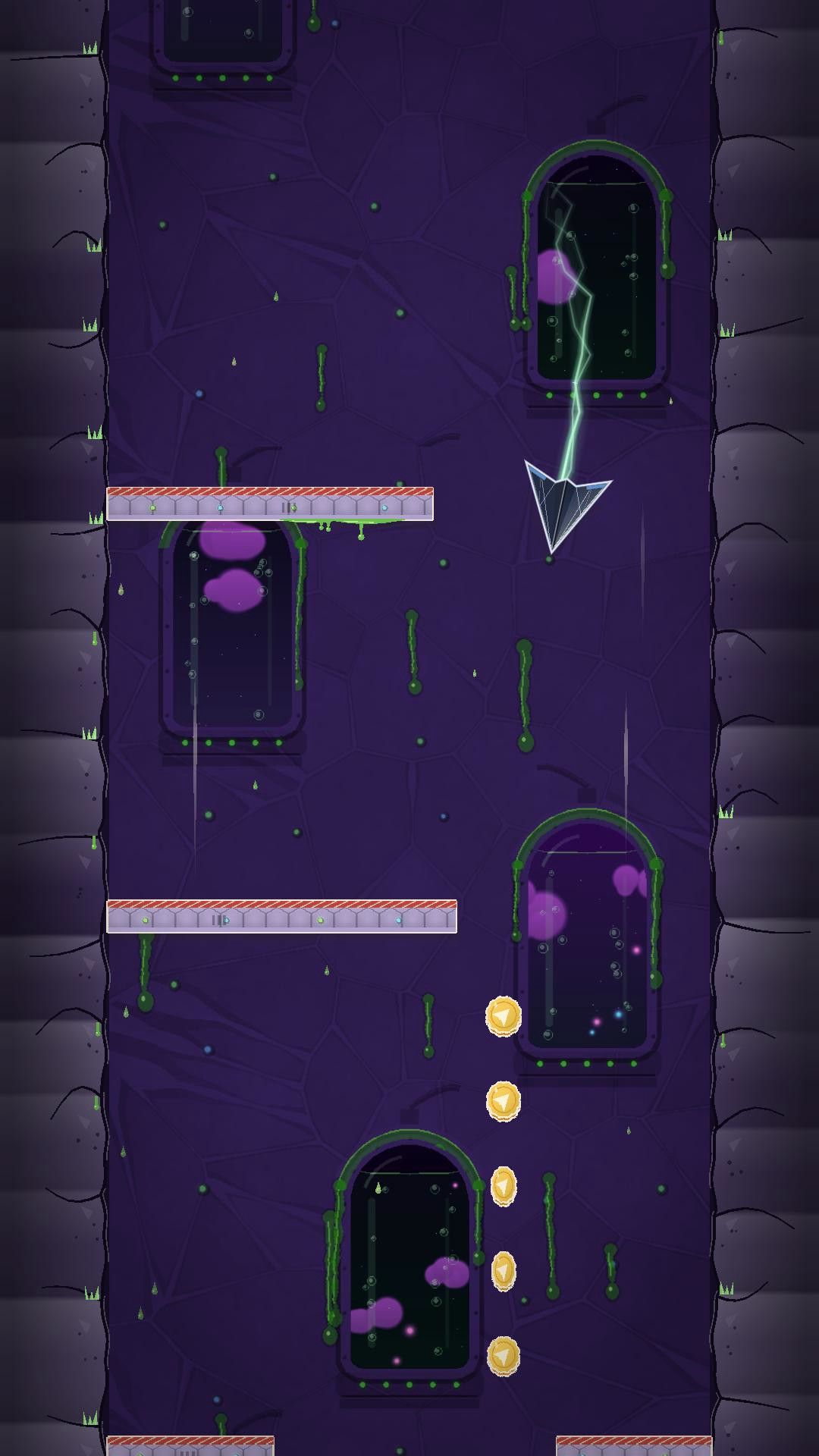
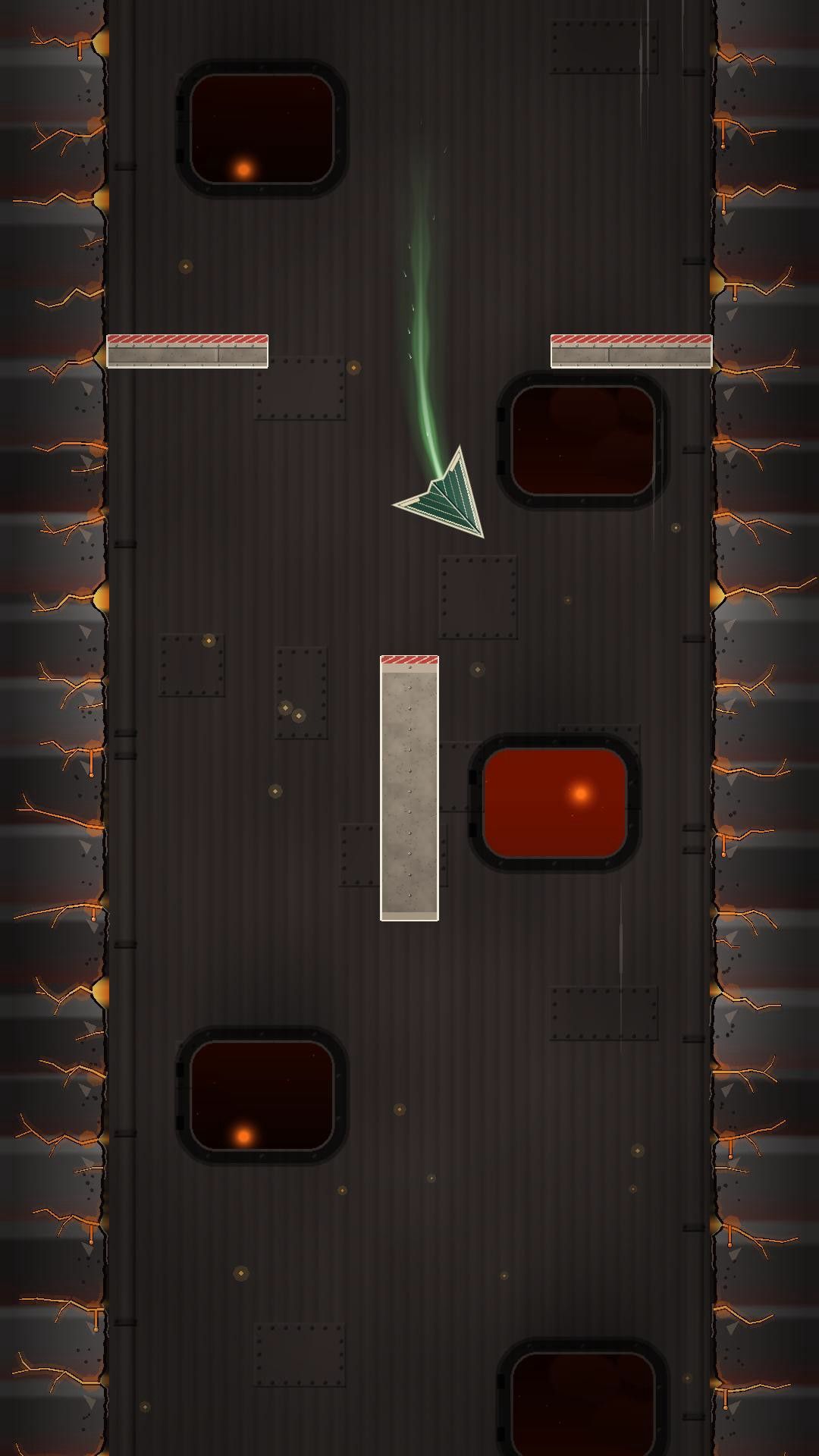
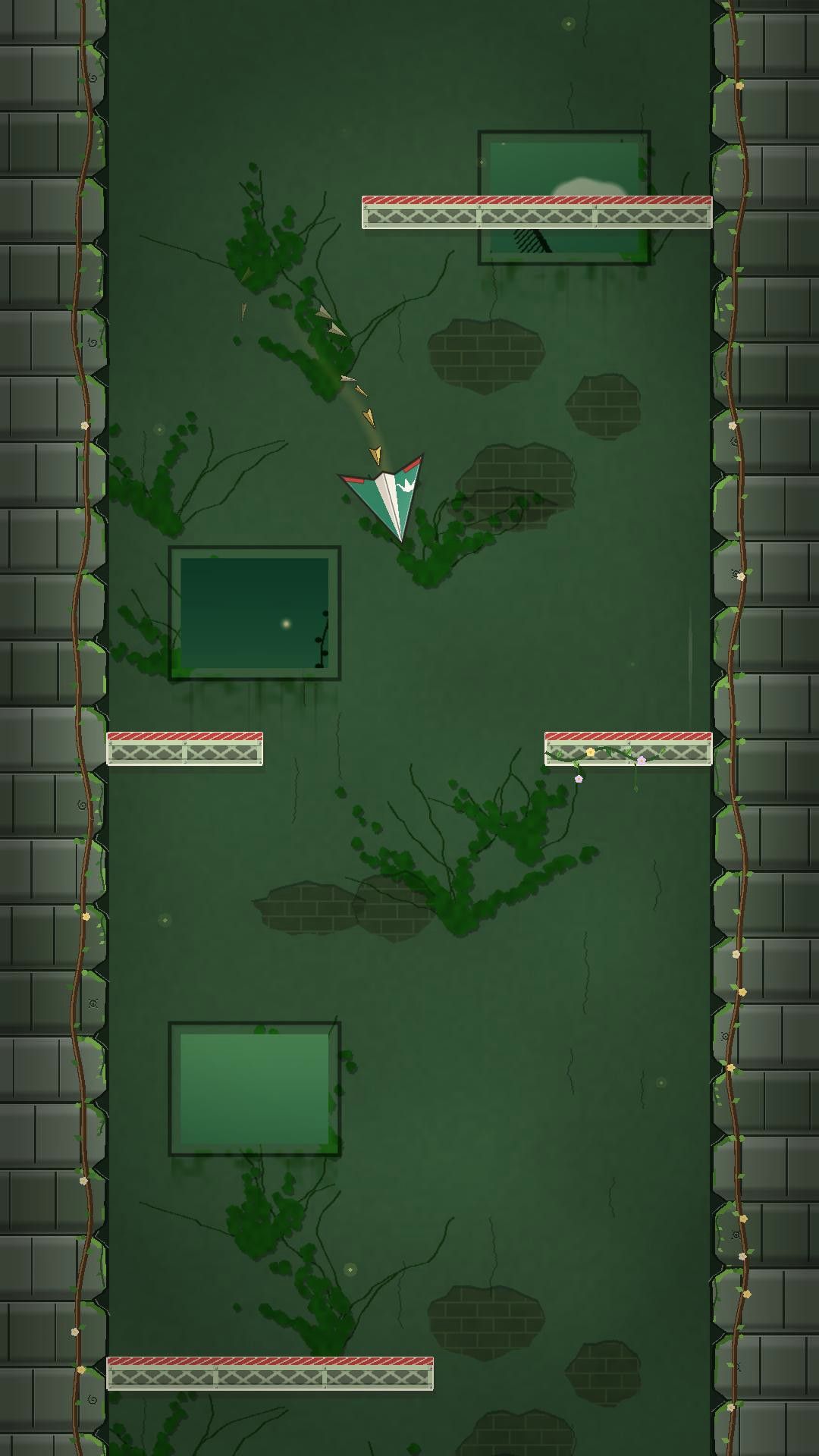
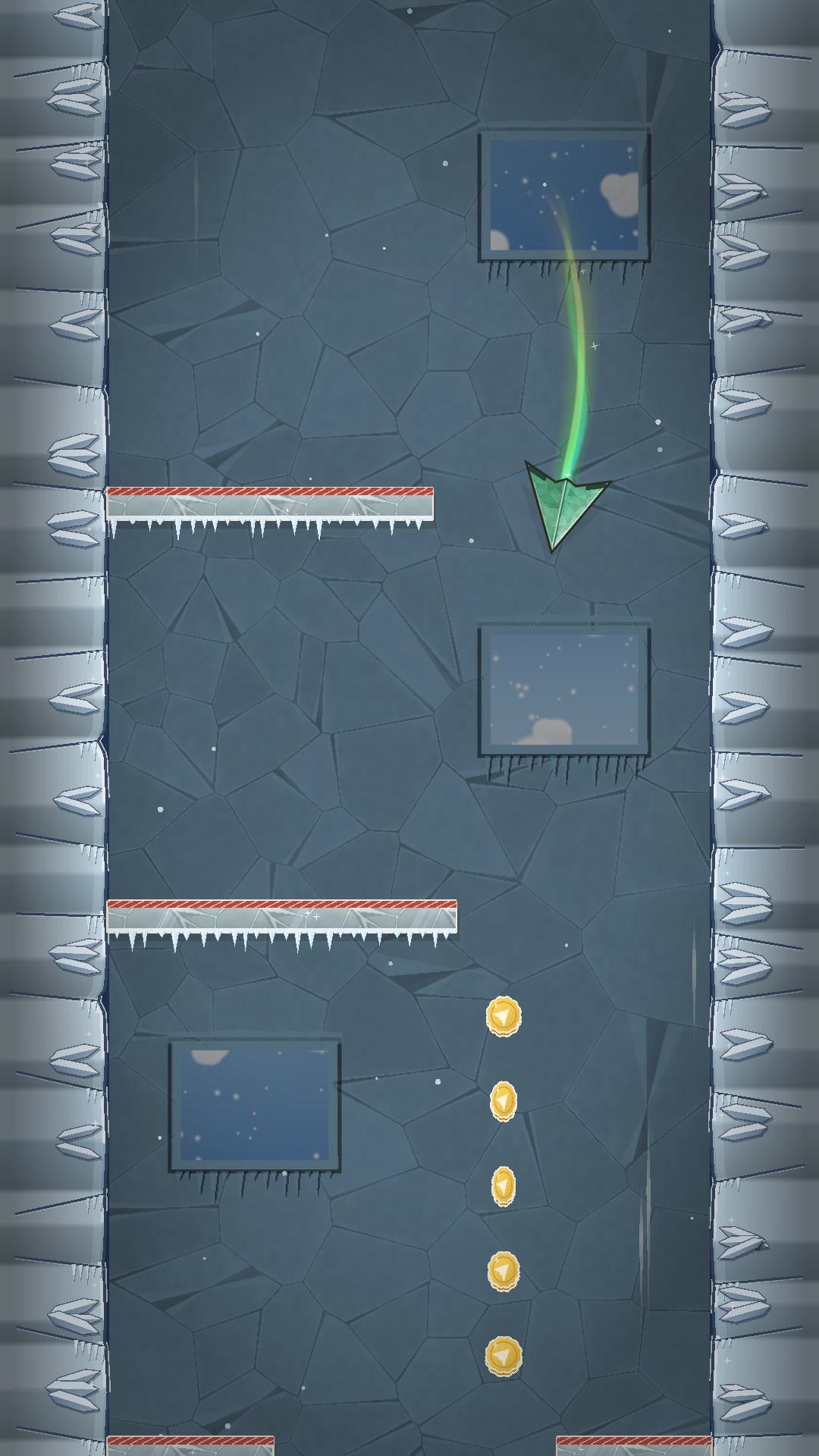
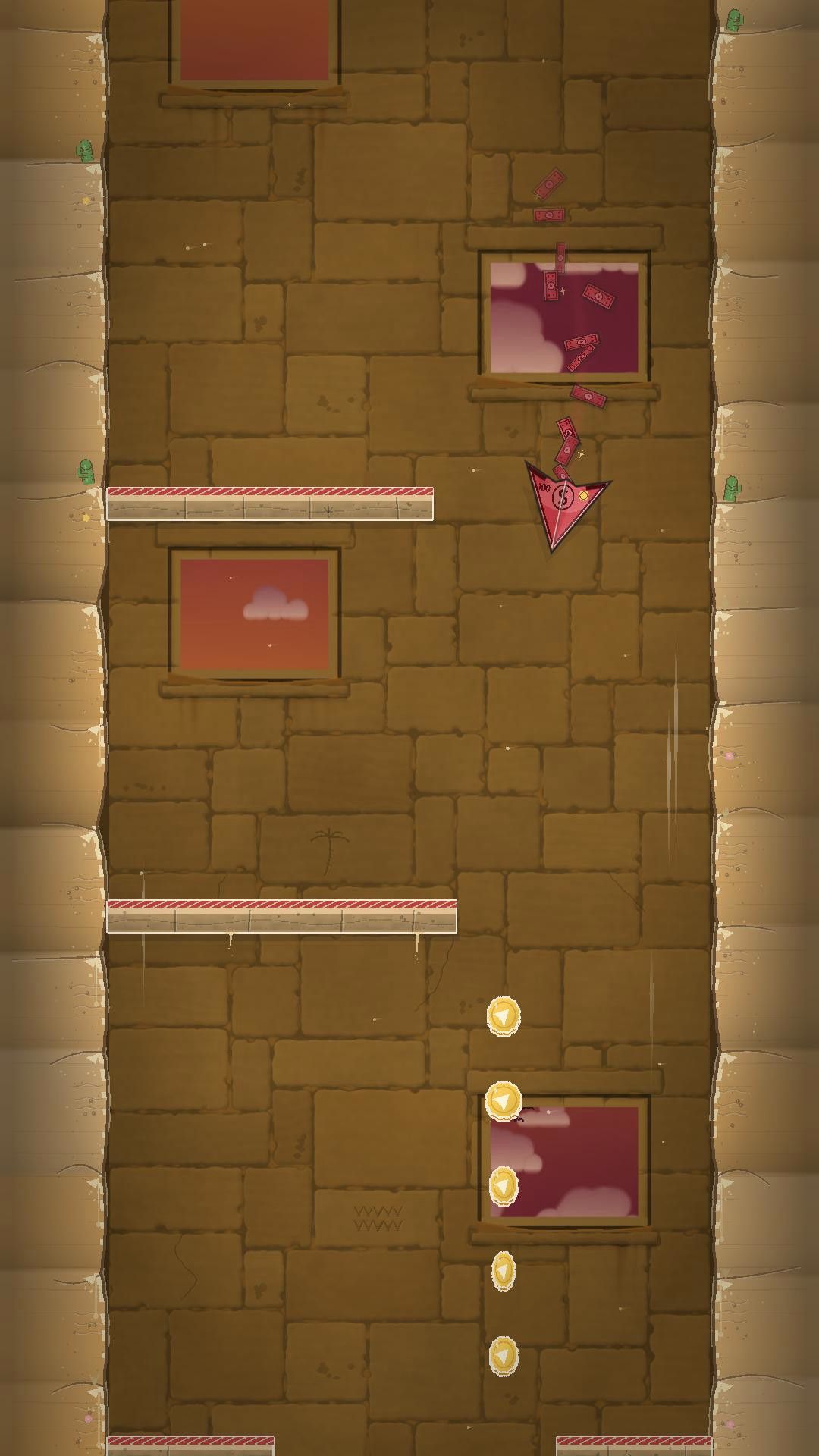
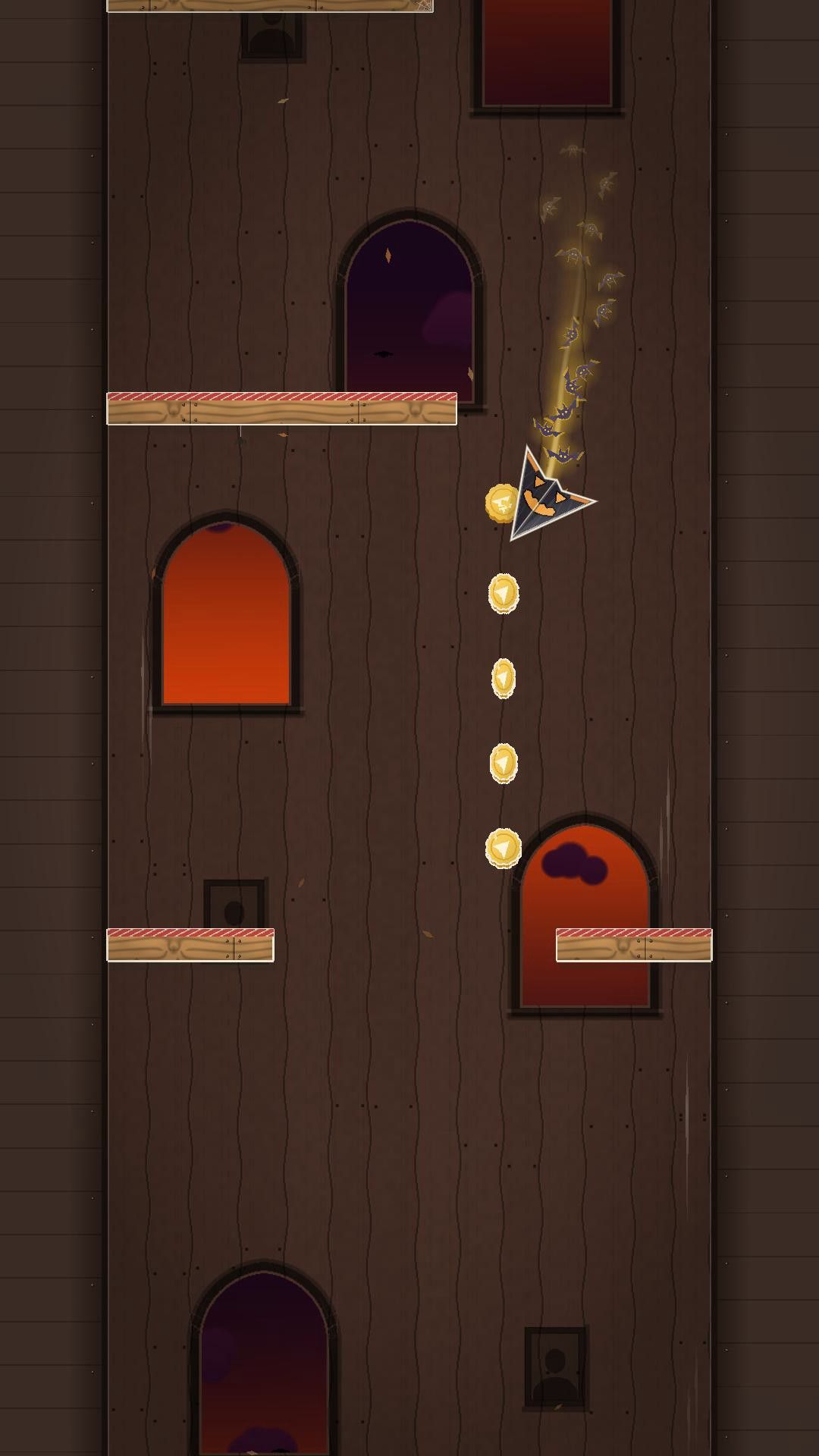
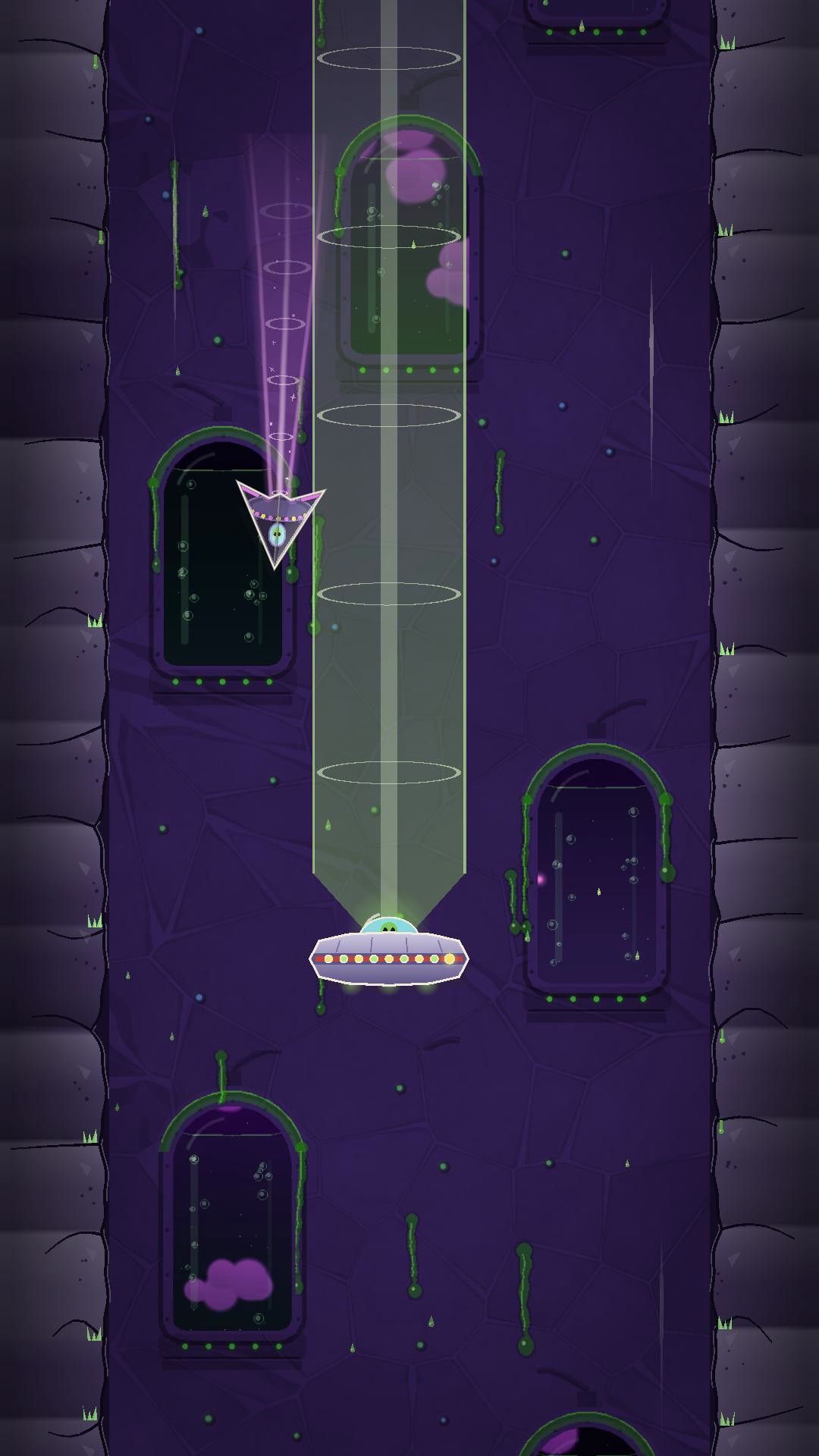
Each world brings obstacles of its own, from Classic’s swinging crates and the Glacier’s drifting ice floes to the Jungle’s flytraps and vines, the Aliens’ wall lasers and the Desert’s sliding slabs. Six of them also send something after you: a parcel drone, a rockfall, a flying saucer, a cactus that throws, an ice wizard and a spectre. You can meet them all in every boss in Paper Drift, and tour the scenery on the worlds page.
Reasons to keep folding
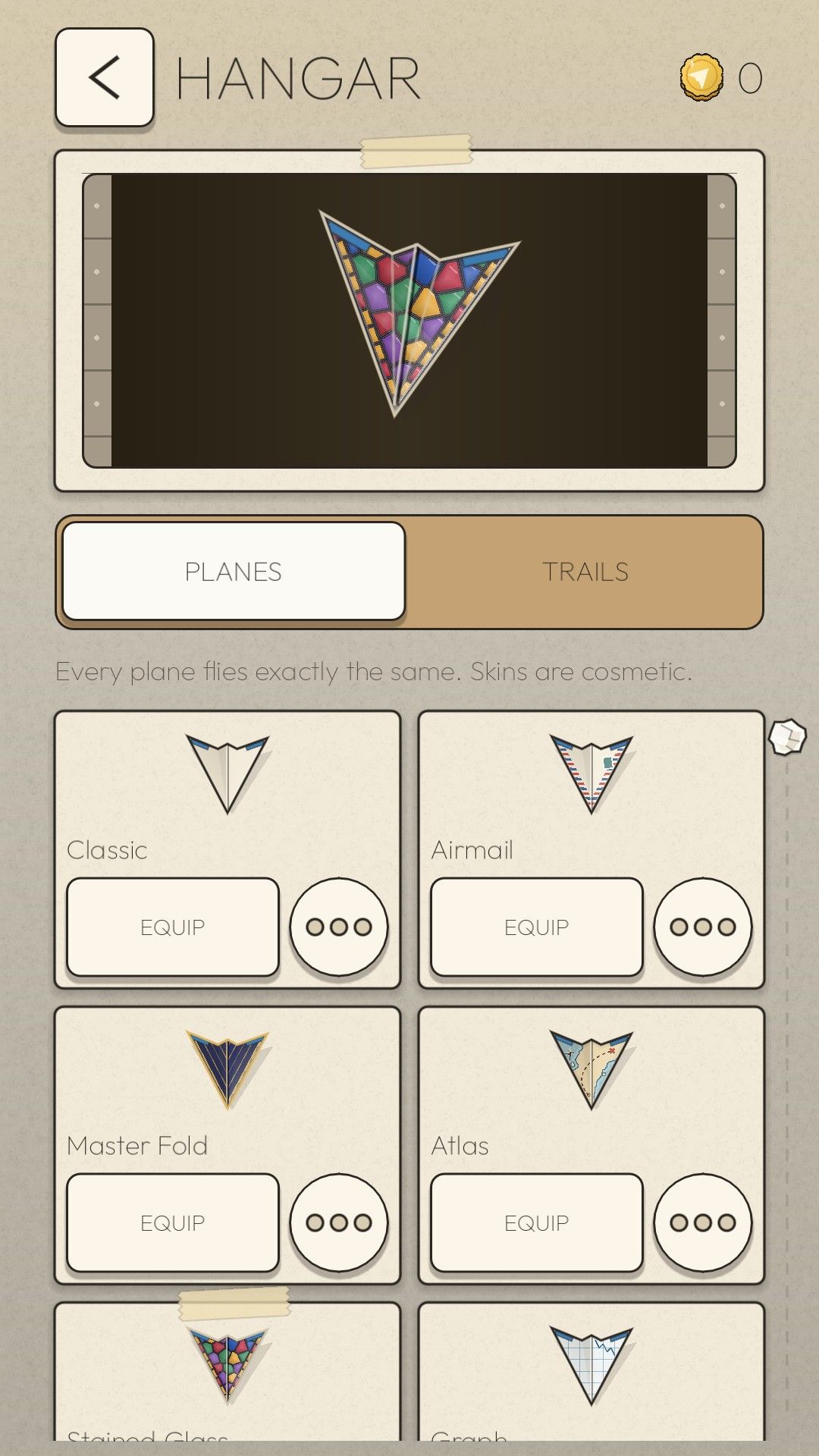
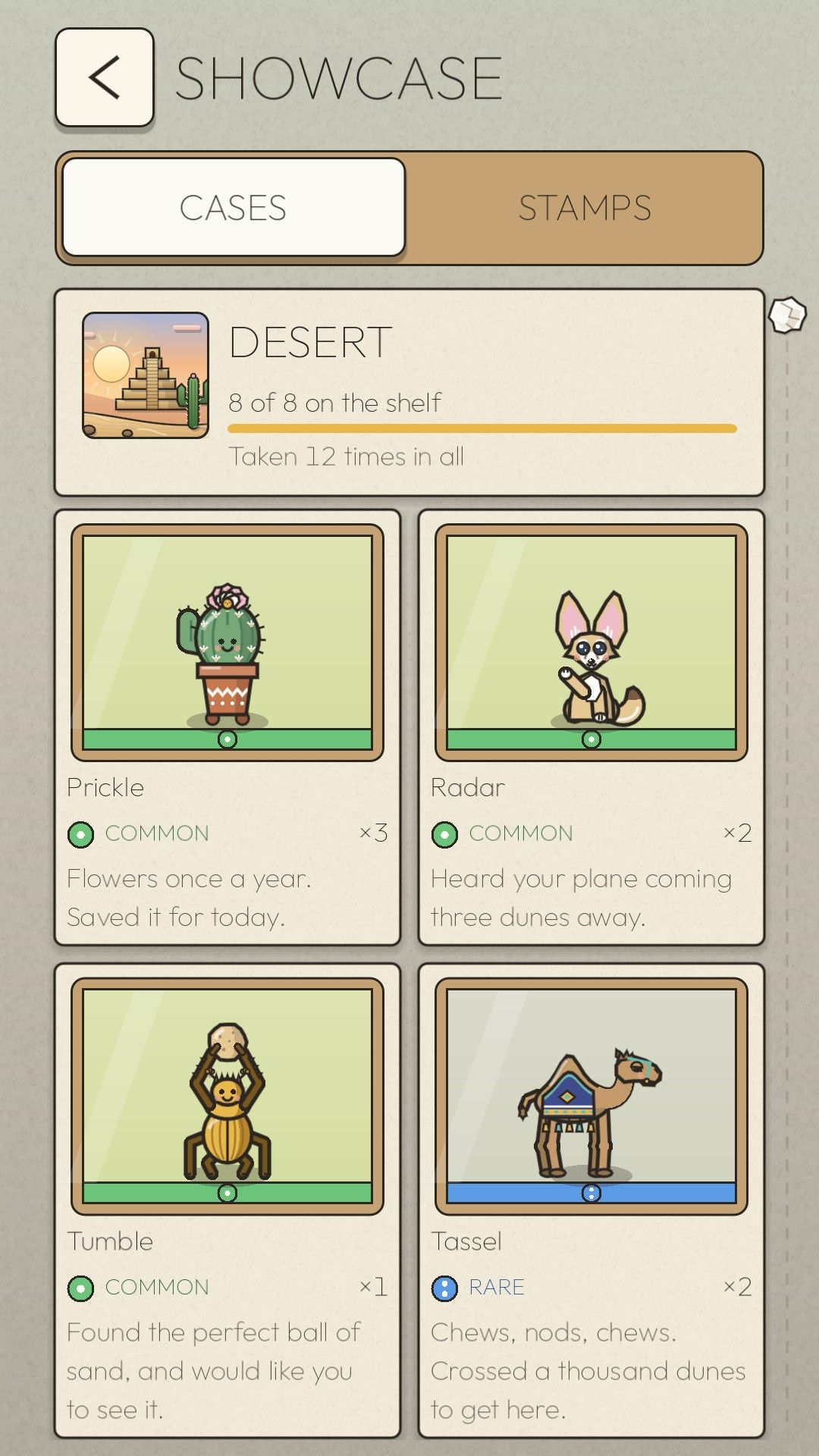
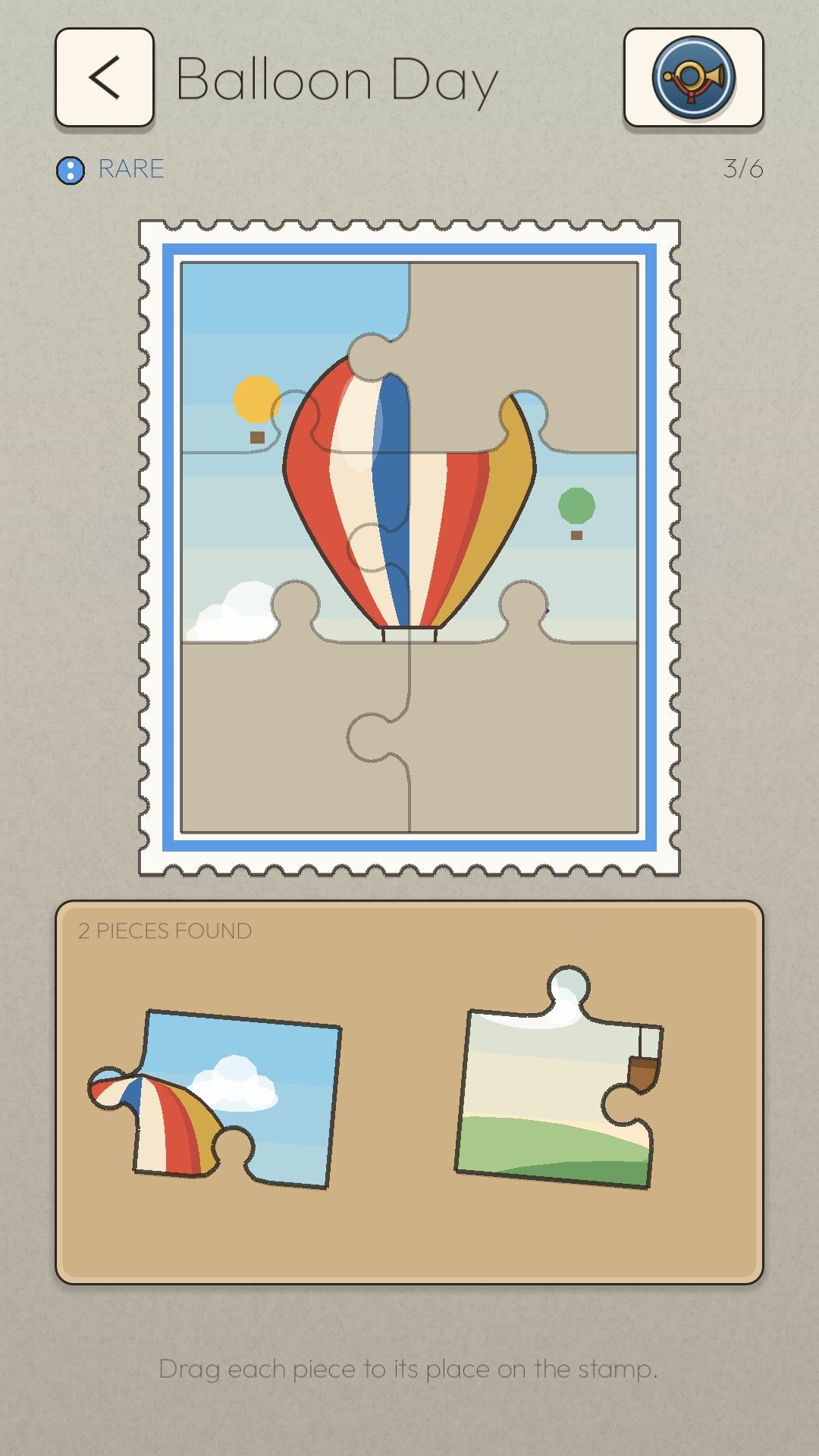
Runs pay out in paper coins, spent in the Hangar on colours for 18 planes and 19 trails. All of it is cosmetic: every plane flies exactly the same, so nothing you unlock or buy makes the game easier. Figures appear in the windows of the shaft; tap one to keep it in the Showcase, 67 in all from common to ultra rare. Stamps flying through the shaft are jigsaw pieces for a 13-stamp album. Four daily quests and 50 levels, each with a reward, round it off.
Four ways to play
- Endless: the endless run through the worlds, chasing your best.
- Time Attack: eight hand-built courses with checkpoints, a ghost and four medals each.
- Daily Drift: one course a day, the same for everyone. Always free.
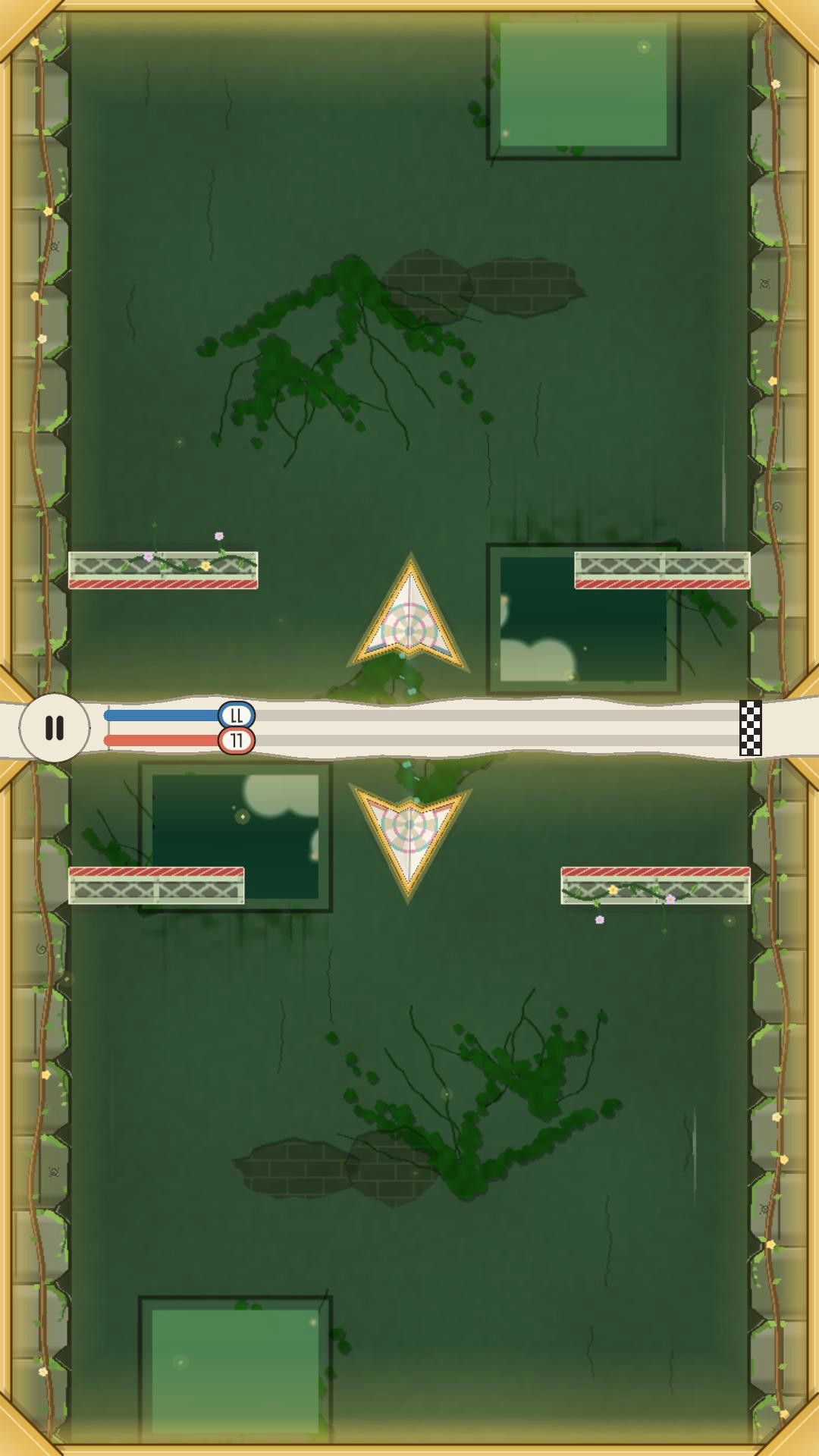
- Race: two players face to face on one phone, split screen, each on their own half. Always free.
Where to start
If you are new, the Paper Drift beginner’s guide explains the controls, the modes and what to do first. Once you know the basics, 15 Paper Drift tips and tricks will add points to every run. And if you would rather fold a real one first, here is how to make a paper airplane that flies far.